
Scott County Court Record Requests
Start by naming the right office. The Scott County Circuit Clerk keeps Circuit civil and criminal filings. That office also holds indictments, motions, judgments, executions, and appeals from lower courts. The Chancery Clerk holds chancery, estate, guardianship, domestic-relations, land, and equity records. Justice Court files sit with the Justice Court Clerk. Those cover traffic, DUI, misdemeanor, small-claims, and preliminary felony matters. A city citation file belongs to that city court clerk. Sending the request to the correct office matters. The county records form was never meant to replace the court clerk for a case file.
- Find the court and case number, then use the docket to identify the exact document and filing date.
- Check the appropriate PAMEC/MEC docket for a non-restricted electronic image, if account access applies.
- Ask the clerk about free courthouse electronic viewing, plain copies, certified copies, and any record-specific restriction.
- Submit the request in person, by phone, mail, fax, or email where the clerk accepts it. Confirm email requests before sending payment or identification.
- State the preferred delivery method and pay an estimate in advance if the office requires it.
Phone numbers help you reach each office fast. Circuit is 601-469-3601, Chancery is 601-469-1922, and Justice Court is 601-469-4555. The Circuit and Chancery clerks publish mail, fax, and email contacts, while Justice and municipal channels run mostly through phone and mail.
Scott County Records Request Form
Scott County uses a two-page Public Records Request form. It is directed to the Scott County Chancery Clerk, P.O. Box 630, Forest, MS 39074. It asks for your contact information, the subject matter, a clear description of the record, whether you want inspection or a copy, your delivery choice among mail, in-person, or email, and a signature. County-use fields cover estimated costs and compliance. For a court file, be specific. Spell out the court custodian, case number, document, date range, and whether you need certification.
The form has limits. There is no case-number field, no certification or exemplification option, and no guaranteed turnaround. It states the county has a reasonable period to review, locate, assemble, and provide records. A certified court copy may still be available at the clerk counter. For the local form route, turn to Scott County's official forms page.
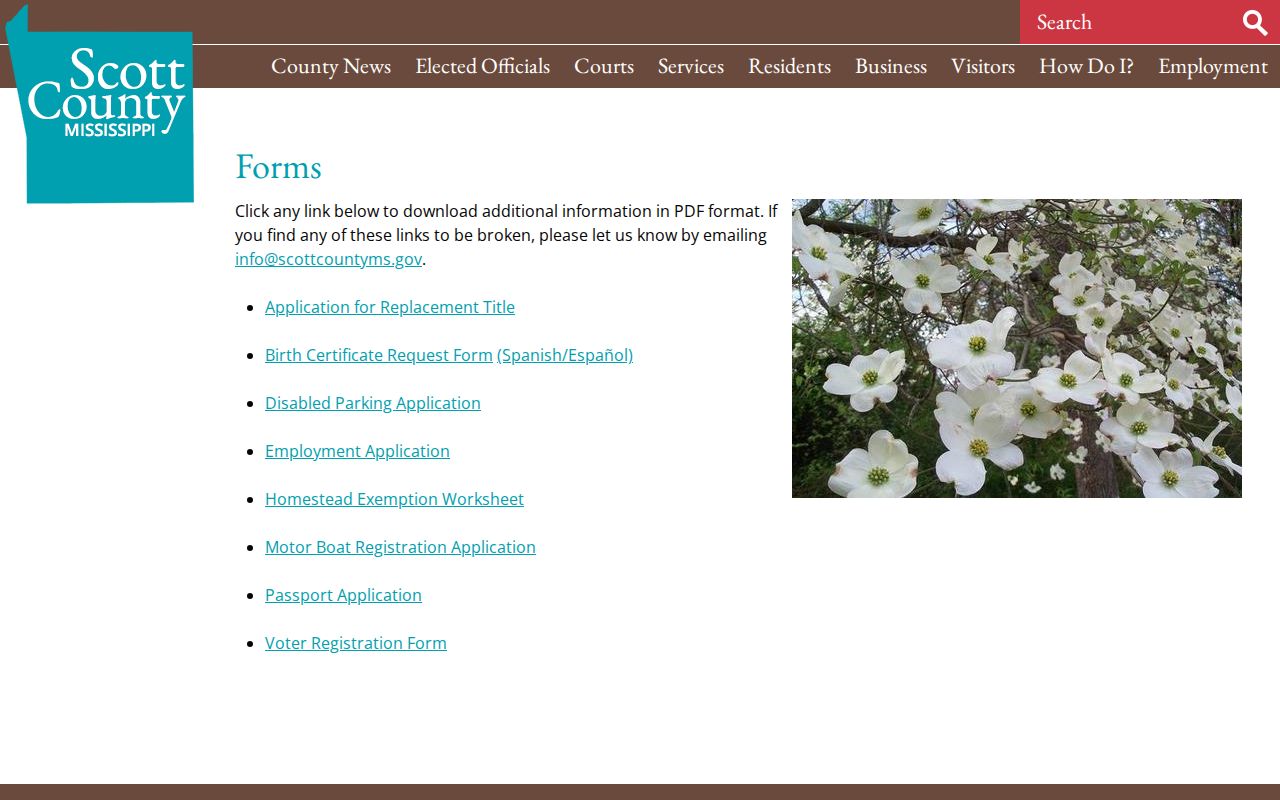
That forms page supports the county request process. For a case record, though, the court-specific clerk stays the right custodian.
Scott County Court Record Types
Keep three layers straight. A docket sheet is the running, chronological account of what has happened in a case. A filed document is the real item. It may be the pleading, indictment, petition, motion, order, judgment, exhibit, or return. A certified copy is one the clerk authenticates as true to the court file. MEC/PAMEC can link electronic documents that are not restricted. Yet access may demand an account. A document can be restricted even while its docket entry stays visible.
- General docket sheets and chronological case entries
- Pleadings, motions, indictments, petitions, and process returns
- Orders, judgments, and dispositions
- Chancery estate, guardianship, domestic-relations, land, and equity filings where public
- Justice Court or municipal traffic, misdemeanor, ordinance, and small-claims case files
A transcript is a different animal from a clerk copy. The court reporter prepares this verbatim hearing record, and you order it from that reporter under the applicable court process.
Scott County Court Record Layers
A Scott County docket gives the fastest picture of case activity. Its text is often abbreviated. Treat it as a map, not the destination; use it to decide what to request. A filed paper supplies the full public document when one is available. Another court, agency, or official process may need proof. Then ask about a certified copy carrying the clerk's authentication. Remember that the online docket is only an informational register, not an automatically certified record.
| Record layer | What it provides | Where to ask |
|---|---|---|
| Docket sheet | Chronological events, settings, and status | PAMEC/MEC or responsible clerk |
| Filed document | Actual public paper or electronic image | Electronic link or clerk request |
| Certified copy | Clerk-authenticated complete copy | Responsible Circuit or Chancery clerk |
| Transcript | Verbatim hearing record | Assigned court reporter |
Blocked image online? Ask whether it is restricted remotely yet viewable at the clerk office. And never presume a docket PDF includes the exhibits.
Scott County Court Record Contents
Mississippi's statutory general docket records party names, filing date and time, papers, process, judgments, numerical files, and alphabetic indexes. A case file can hold more than the docket line shows. Only public and lawfully accessible items will be released. Older Scott records may live in paper docket books, minute books, or archives rather than a remote MEC result. Before concluding an older file is unavailable, ask questions. Cover the approximate year, retention, index method, and archive retrieval.
| Case number | The court-assigned file identifier for locating and citing the record. |
|---|---|
| Pleadings | Public complaints, petitions, indictments, motions, answers, and returns. |
| Orders and judgments | Signed court rulings and a final decision when entered. |
| Docket sheet | Chronological case entries, notices, settings, and status history. |
| Exhibits | Filed attachments or evidence, which may be separate, redacted, or restricted. |
Note: A docket entry does not prove a balance is paid, a document is certified, or that every item in the file is open to public inspection.
Scott County Court Record Access
A PAMEC permission message marks an access limit. It is not an invitation to hunt for the document somewhere else. MEC procedures restrict sealed cases and documents available only to authorized users. They also require protection of personal identifiers. During regular hours, the public can view civil and criminal records electronically at the courthouse. That access carries no remote fee, subject to copy fees. The clerk still controls whether a given item may be inspected or copied. Mississippi public-records guidance sets out the state access framework.
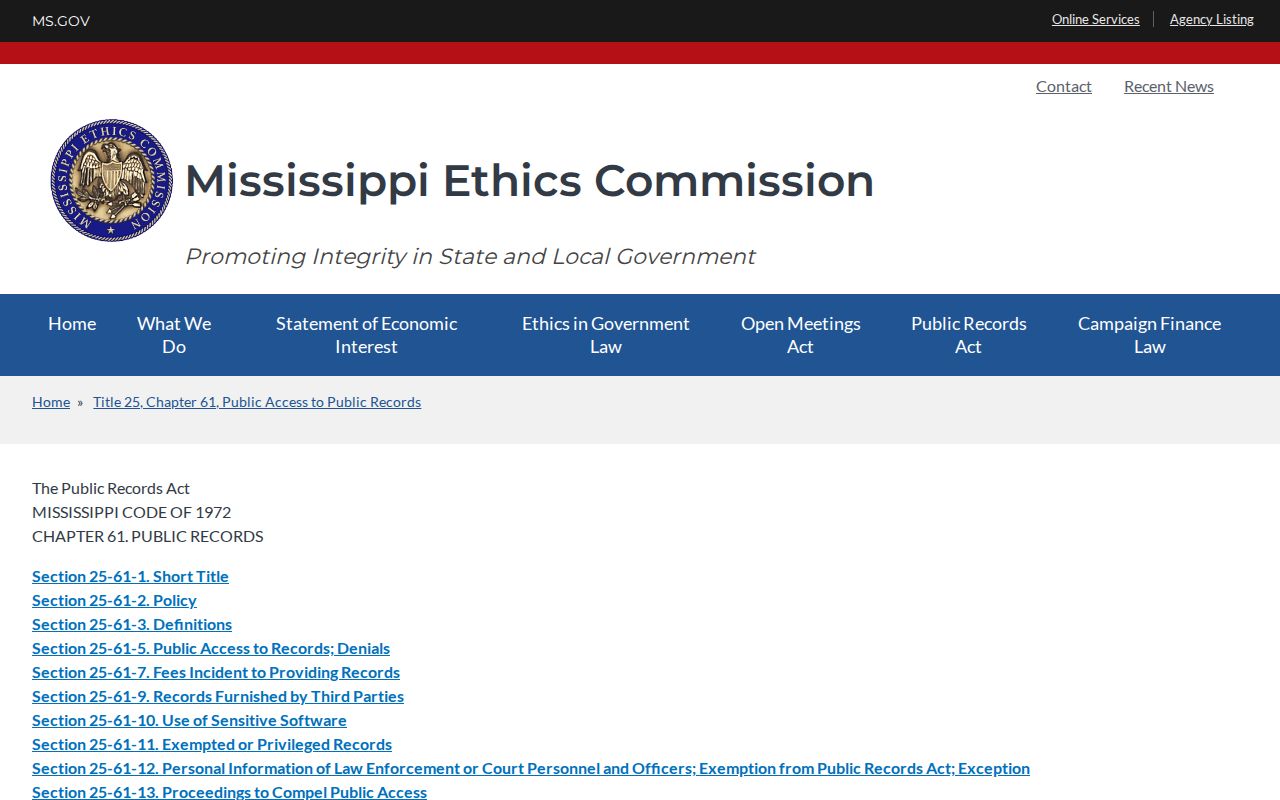
That public-records guidance frames the rules. A court order or confidentiality statute can still limit a particular Scott County file.
Scott County Court Record Fees
Fees turn on the custodian and the copy type. The figures below are statutory or form-based amounts. They are not a promise of your total invoice. Before sending payment, ask the clerk to confirm current charges, especially for a docket sheet, search, exemplification, archive retrieval, or transcript. The county form also allows advance charges for actual labor, delivery, materials, and review or redaction work.
| Item | Amount located |
|---|---|
| Circuit Clerk certification | $1 per complete document |
| Circuit Clerk copy by clerk | $1 per page |
| Circuit final record or transcript | $2 per page |
| Chancery certification | $1 per complete document |
| Chancery copy by clerk | $0.50 per page |
| County request copy | $0.50 per page plus actual allowed costs |
| County request labor | $20 per hour |
Scott County Circuit Clerk
Scott County Courthouse
100 E. 1st Street, Forest, MS 39074
P.O. Box 371, Forest, MS 39074
601-469-3601
For Chancery records, take your request to the Chancery Clerk, not the Circuit office. Justice Court and municipal copy fees vary by court, and no single published Scott County schedule collects them in one place.
Scott County Court Record Fee Rules
Mississippi Code §25-7-13 sets the Circuit Clerk fee items. Certification and copy fees for the Chancery Clerk fall under §25-7-9 instead. The Scott County request form also carries its own rate card. It lists $0.50 per page. Labor runs $20 per hour. Different clerks, different records, different rules. Treat these figures separately rather than as one universal court-copy fee.
Access rules: Mississippi Code §§25-61-2 and 25-61-5 state the public-record policy and access or denial framework, including redaction of exempt material where possible.
Mississippi Code §§25-7-13 and 25-7-9 are the official-code gateway for Circuit and Chancery clerk fees.
Mississippi Code §§43-21-251 and 43-21-263 support Youth Court confidentiality and sealing limits.
The Secretary of State's Mississippi law gateway hosts the official code text behind those fee rules.
The code gateway provides the state-law source for clerk fees and court-record access limits.
Scott County Court Record Boundary
Scott County court case records stop at the state line. They hold no federal cases. Southern District of Mississippi matters and bankruptcy filings live in the federal court system. Reach them through PACER and federal CM/ECF. Point a federal case to the federal clerk. Never send it to the Scott County Circuit Clerk. The state clerk's certificate carries no weight for a federal filing. The Southern District of Mississippi court site lays out that separate federal-record route.
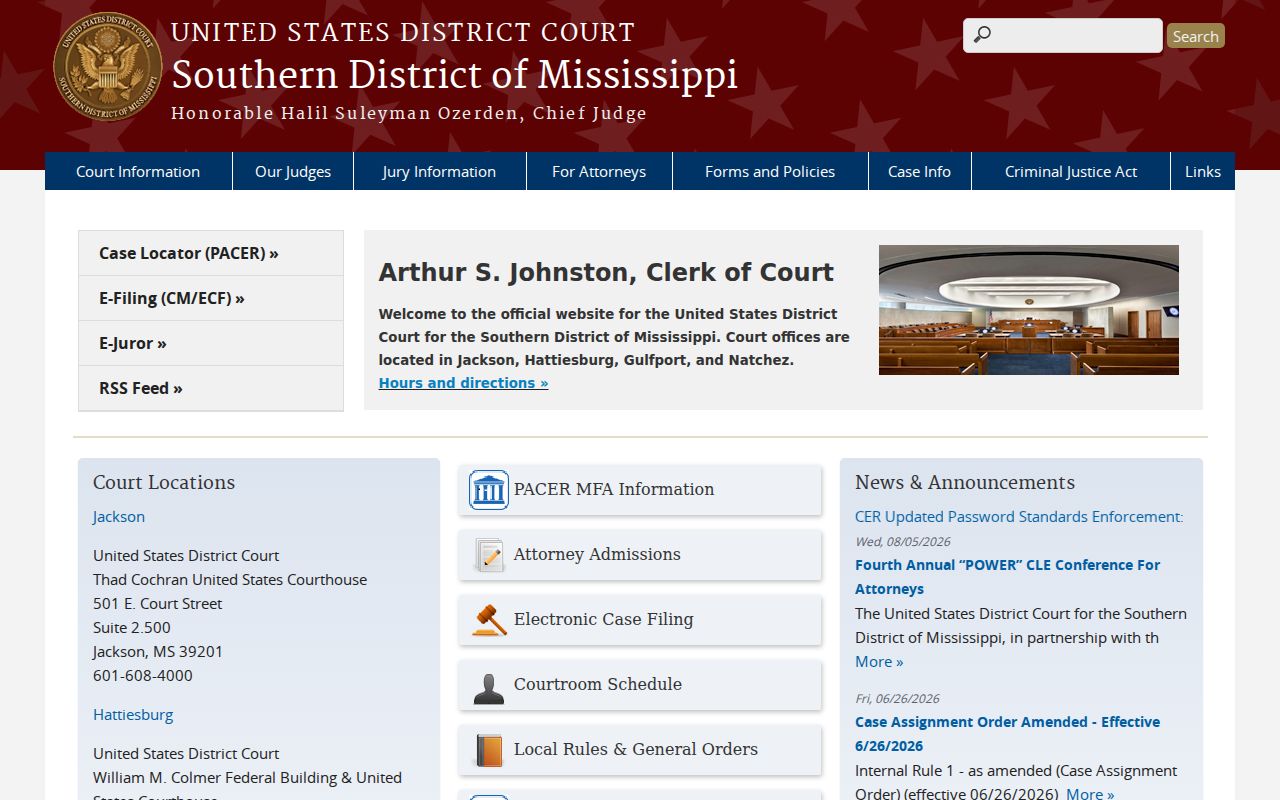
The federal court page draws the line between Scott County records and federal case files.
Scott County Court Record Access Rules
Public access has limits. Sealed-case orders, Youth Court confidentiality, adoption confidentiality, expungement limits, commitment confidentiality, or any lawful document restriction still control. A public copy may come back redacted. A sealed case may vanish from public search or show only a thin flag or header. Older paper files can sit in the courthouse even when a remote search returns nothing at all. Ask the actual court clerk what fits your case. Options include a plain public copy, a redacted version, courthouse viewing, or a court order. The Scott County public-records form offers a general county route. But the court clerk still maintains the case and has the final word. A Scott County docket search can surface a public case number or document date before you file any record request.